
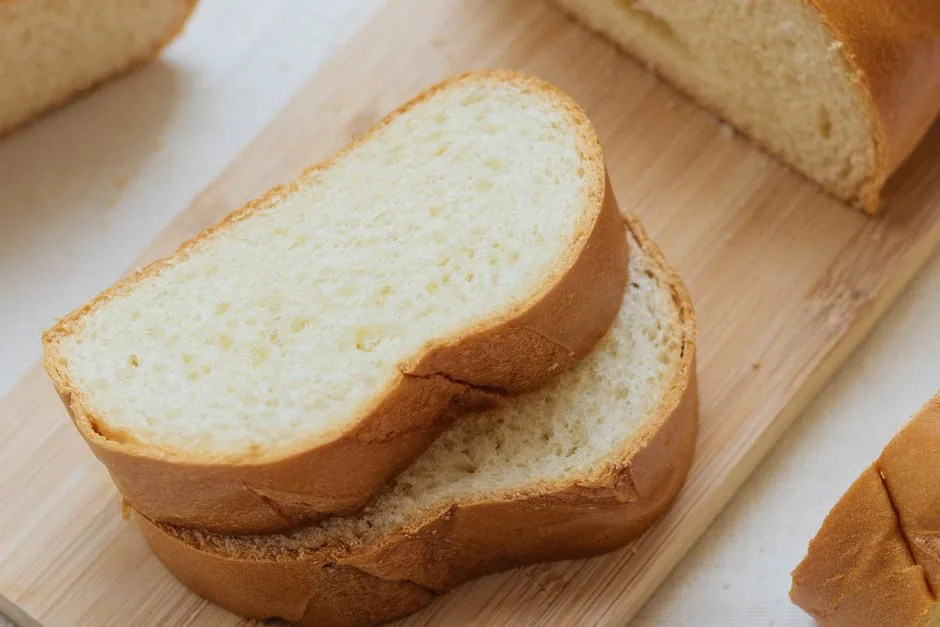
This oven-baked gluten-free bread is soft, sliceable, and completely dairy-free — no bread machine required. Made with a blend of olive oil and warm water to activate the yeast, it bakes up with a tender crumb that bends and squishes just like classic sandwich bread. If you have been looking for a reliable gluten-free loaf you can make right in your oven, this is it.
Why You’ll Love This Recipe
- No bread machine needed: Everything happens in a bowl and a loaf pan — just your oven.
- Dairy-free: Olive oil and warm water replace milk, so it fits dairy-free diets too.
- Soft and sliceable: Bends without cracking, toasts well, and holds up to sandwiches.
- Simple method: One rise, one pan, straightforward steps for beginners.
Ingredients
- 3 cups (360g) gluten-free all-purpose flour blend (with xanthan gum)
- 2 1/4 teaspoons (1 packet) active dry yeast
- 1 1/2 cups warm water (110°F / 43°C)
- 1/4 cup olive oil, plus more for the bowl
- 2 tablespoons sugar or honey
- 1 1/2 teaspoons salt
- 2 large eggs, at room temperature
- 1 teaspoon apple cider vinegar
Instructions
- Activate the yeast. In a large bowl, stir the warm water, sugar, and yeast. Let it sit for 5 to 10 minutes until foamy. If it does not foam, the water was too hot or the yeast is old — start again with fresh yeast.
- Mix the dough. Whisk in the olive oil, eggs, and apple cider vinegar. Add the gluten-free flour and salt. Beat with a wooden spoon or a stand mixer with the paddle attachment for 3 to 4 minutes. The dough will look more like thick cake batter than traditional bread dough — that is normal for gluten-free bread.
- Shape and pan. Grease a 9×4-inch Pullman loaf pan (or a 9×5-inch loaf pan) with olive oil. Scrape the dough into the pan and smooth the top with wet hands or a wet spatula.
- Let it rise. Cover loosely and let rise in a warm spot until doubled, about 45 to 60 minutes. Do not over-proof — once it doubles, it is ready to bake.
- Bake. Heat the oven to 375°F (190°C). Bake for 45 to 55 minutes, until deep golden and the internal temperature reads 200°F to 210°F (93°C to 99°C). If the top browns too fast, tent loosely with foil.
- Cool completely. Turn the loaf out onto a wire rack and cool for at least 1 hour before slicing. Cutting too soon makes gluten-free bread gummy inside.
Gluten-Free Baking Tips
- Measure flour correctly: Use the spoon-and-level method — spoon flour into the measuring cup, then level with a knife. Scooping packs in too much flour.
- Use a small Pullman pan: A 9×4-inch pan gives the tallest, best-textured loaf. In a 9×5-inch pan the bread spreads wider and rises less.
- Proof in a warm spot: Bread rises best around 80°F to 90°F (27°C to 32°C). An oven with the light on (heat off) works well.
- Do not over-proof: Gluten-free dough does not have the structure to hold an over-rise. Bake as soon as it doubles.
- Cool before slicing: The crumb finishes setting as it cools. Slicing hot bread ruins the texture.
Frequently Asked Questions
Can I make this without eggs? Eggs add structure that gluten-free bread really needs. For an egg-free version, try 1/4 cup unsweetened applesauce plus 1 tablespoon ground flax mixed with 3 tablespoons water per egg — the texture will be denser.
Which gluten-free flour works best? Use a blend formulated for baking that already contains xanthan gum (such as King Arthur or Bob’s Red Mill 1-to-1). Single-flour recipes behave very differently.
How should I store it? Keep sliced bread in an airtight bag at room temperature for 2 days, or refrigerate up to 5 days. It also freezes well for up to 3 months — toast slices straight from frozen.
Why did my loaf sink in the middle? Usually over-proofing or under-baking. Bake until the center hits 200°F (93°C), and do not let the dough more than double before baking.
More Recipes to Try
If you enjoy homemade bread, try the Soft Homemade Dinner Rolls for a classic wheat-based roll, or the Garlic Naan Bread for a flatbread that pairs with everything.